
Instagram ad creative fatigue: refresh the idea, not just the background
Investigate whether repetition is the problem, develop distinct creative angles and compare them without confusing new artwork with proven sales improvement.
Treat fatigue as a hypothesis to investigate
An Instagram ad can lose effectiveness after repeated exposure, but a weak day does not establish creative fatigue. Review the pattern across a comparable period: delivery, reach, frequency, visits and paid orders. Check whether spend, the audience, the offer, stock or measurement changed. A creative that performed differently during a promotion may be responding to the promotion ending rather than viewers becoming bored.
Look at the creative in context. Are several ads weakening together, or one particular concept? Has the mix of placements changed? Frequency is an aggregate measure, not proof that every viewer saw the ad the same number of times. Avoid a universal frequency cutoff or a rule that every asset expires after a fixed number of days. The goal is a useful next hypothesis, not a convenient label for every disappointing result.
Build angles around different reasons to care
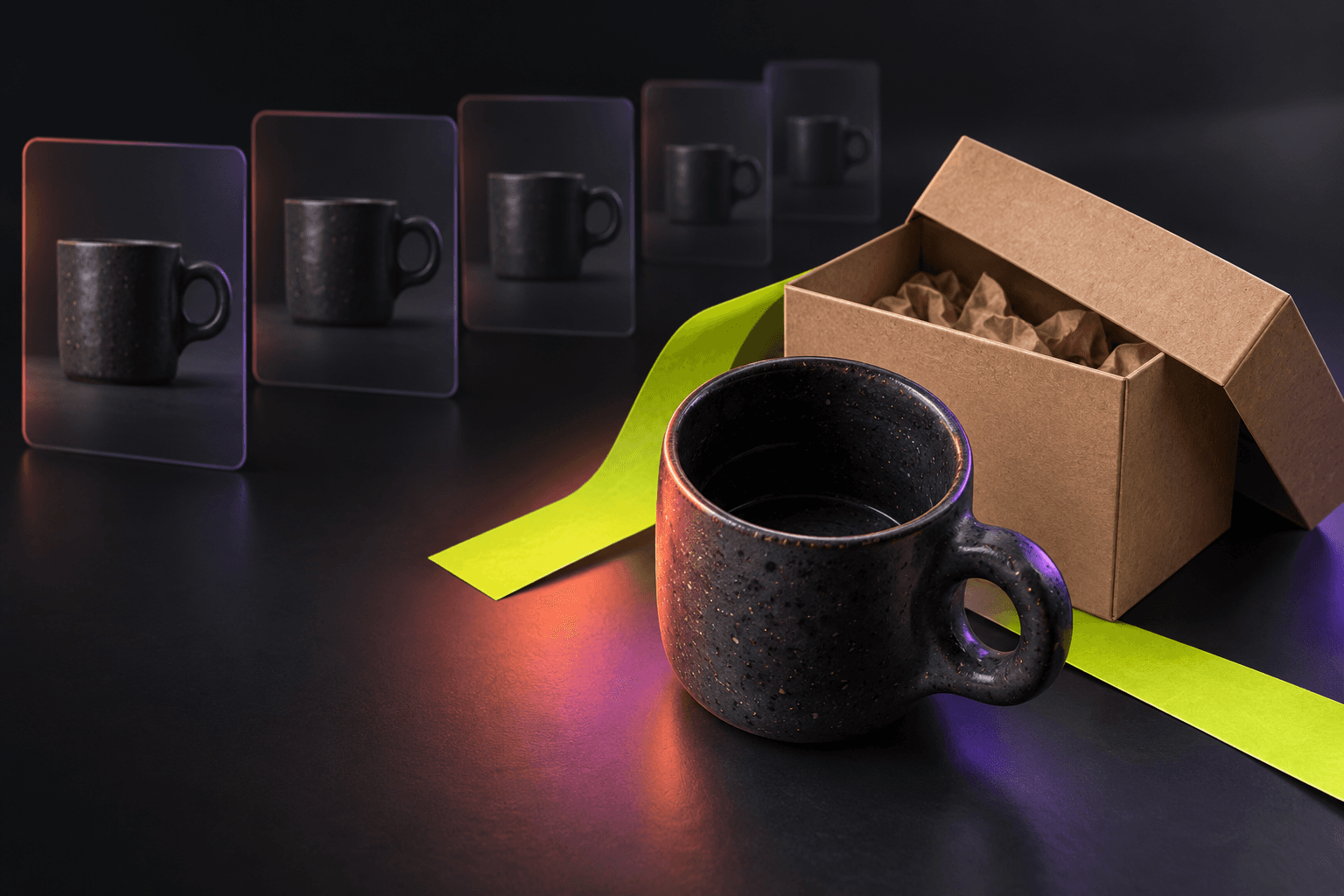
Meta Blueprint describes creative diversification through concepts, motivators and formats. Separate these decisions in your planning. A new colour behind the same mug may be a useful execution test, but it does not necessarily introduce a new purchase reason. A close-up of the handle, a cupboard-scale view and a carefully packed gift presentation tell different product stories even when the brand identity stays consistent.
Write an angle sheet before making a large batch. Name the shopper question, the evidence you can show and the destination that answers the next question. Use facts from the actual product, not convenient claims invented to make the ad more exciting. For a ceramic mug, a dishwasher demonstration needs verified product guidance; a decorative generated scene cannot establish durability or cleaning performance.
- Everyday use: show the real handle and how the product fits its intended setting.
- Material detail: show an accurate finish and a clear product silhouette.
- Gift consideration: show the actual packaging and what the buyer receives.
Produce a small, controlled refresh
Begin with one new angle against an existing control rather than commissioning every possible variation. A practical brief might read: Use the approved mug reference. Create a quiet morning-table scene where the handle and complete silhouette remain visible. Keep the actual glaze and proportions, use the saved brand palette and leave clear space for a separately added headline. Do not add accessories that appear included in the purchase.
Approve a still before extending the idea into motion. For a short clip, request one readable movement, such as a restrained camera approach to the handle, and review the whole output for shape changes. Keep exact copy, prices and qualifications in the finished layout. A more dramatic AI effect can create a different question from the one you meant to test, so reject attractive variants that obscure the product or invent a feature.
Evaluate the idea before expanding the format set
Plan the comparison in your advertising tools with a defined business outcome and spending limit. Keep the other decisions as consistent as the chosen test design permits. Meta Blueprint covers A/B and lift testing as ways to assess creative impact; its study-design course also addresses inconclusive results. Record when the evidence is insufficient. A stronger opening or more clicks is useful information, but it is not automatically proof of improved profitable sales.
Use AI Campaign Studio to save brand direction, work from product references and create compatible image or video variants with visible quotes. Product sets adapt one brief across selected placement formats; they do not automatically invent or validate different audience angles. Create a separate brief and quote for a different hypothesis. Export the reviewed files and manage publishing, bids, audiences, tracking and checkout elsewhere. Keep the control, the new brief and the eventual findings together so the next refresh builds on something you learned.
Sources & further reading
- Meta Blueprint: diversification by concept, motivator and format ↗
- Meta Blueprint: measure the impact of ad creative ↗
- Meta Blueprint: design and evaluate advertising experiments ↗
Product documentation can change. Check current provider controls and terms before production.